
Local Law 126 Brooklyn Garage Repairs and Filing Help
Whether the QPSI report is already on your desk or your garage missed the Brooklyn filing window, we map out the next step and our licensed and insured crews handle the repair work.
I Have My Garage Report
Your report lists SREM or Unsafe conditions, and each one has a date attached. Send it over and get back a priced repair plan built around every one of those dates.
I Missed the Filing Deadline
Your Brooklyn garage has no accepted report, and DOB penalties keep stacking up month after month. We book a licensed QPSI partner first, then help you clear the late filing and the violation behind it.
Brooklyn garages had until December 31, 2025 to file their Local Law 126 condition assessment, and that window is now closed. No accepted report yet?
How Does Local Law 126 Apply to Brooklyn Parking Garages?
For any Brooklyn parking garage, Local Law 126 starts with a condition assessment signed by a QPSI, the engineer title DOB uses for a Qualified Parking Structure Inspector. The owner is the one who has to get that report filed. Each condition the engineer finds is rated Safe, SREM or Unsafe, and it falls to the owner to repair whatever the report lists by the dates given.
Brooklyn’s first round of reports was due by the close of the second filing window, and that date has passed. So most owners now sit in one of two places. Garages that filed are working through repairs and yearly observations, while garages that never filed keep collecting late penalties until an accepted report is in. The same law also calls for a parapet observation every year on buildings whose parapets face a street or sidewalk.
All of Brooklyn’s community districts were in the second filing window, which is now closed.
DOB keeps adding penalties for each month a garage goes without an accepted report.
Unsafe conditions carry a 90-day repair deadline, counted from the day the report is filed.
Your Brooklyn Garage Report, Decoded
Each condition in a QPSI report carries one of three ratings. Open a tab to see what yours means and what needs to happen next.
- Safe
- SREM
- Unsafe
A Safe rating tells you the QPSI found nothing that needs repair before the next full assessment. The garage still needs its yearly observation in each year between full reports, and any change worth noting should be dealt with early, before it slips into a worse rating.
SREM, the short form of Safe with Repairs and/or Engineering Monitoring, covers damage that is not a hazard yet but will turn into one if nothing is done. The QPSI gives each SREM item its own completion date, and some have to be watched by an engineer until they are fixed. Leave one open past the next full assessment and it is rated Unsafe.
An Unsafe condition puts people or property at risk right now. The QPSI alerts DOB, the owner has to put up protection such as shoring, netting or barricades at once, and the repair has a 90-day deadline from the filing date. When the work is done, an amended report from the QPSI closes the item.
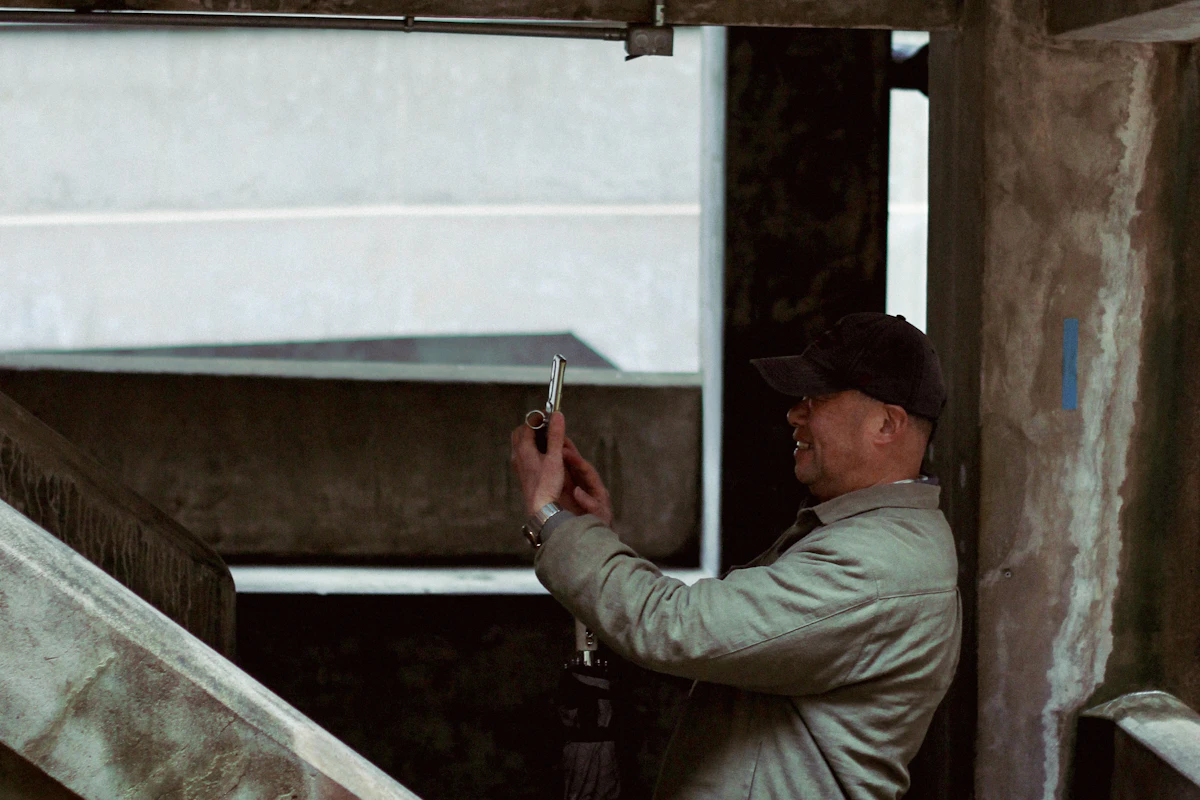
Upper Decks vs Underground Levels in Brooklyn Garages
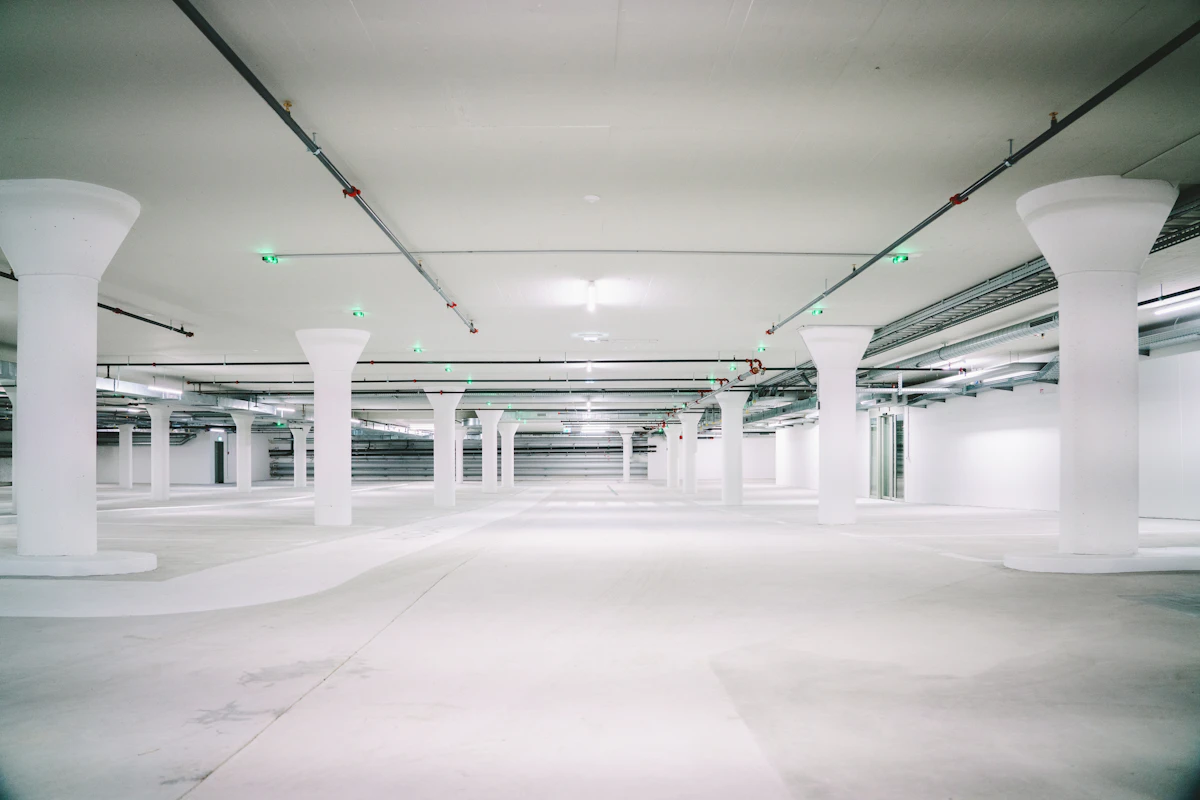
One garage can fail in two very different ways. The roof deck takes snow, rain and summer heat head on, while the levels below grade hold back water pushing in from the soil around them.
Upper Decks, Open to the Weather
What We Handle for Brooklyn Garage Owners
Seven services cover Local Law 126 work from start to finish, from a late filing to the last repair on the roof deck.
Late Local Law 126 filings and violations worked through from the QPSI visit to the DOB payment.
Full condition assessments and yearly checklists, booked with licensed QPSI partners.
Every rated condition repaired in order of its deadline, with paperwork the amended report can use.
Slabs, beams, columns and ceilings rebuilt where steel has rusted and concrete has broken loose.
Water coming through walls, slabs and joints below grade stopped where it gets in.
Traffic coatings and joint systems that keep salt and rain out of the top deck.
Yearly parapet observations through licensed partners and repairs to coping, brick and flashing.
Send your report or DOB notice and we will point you to the right service and the next step.
Why Brooklyn Waterfront Garages Wear Out Faster
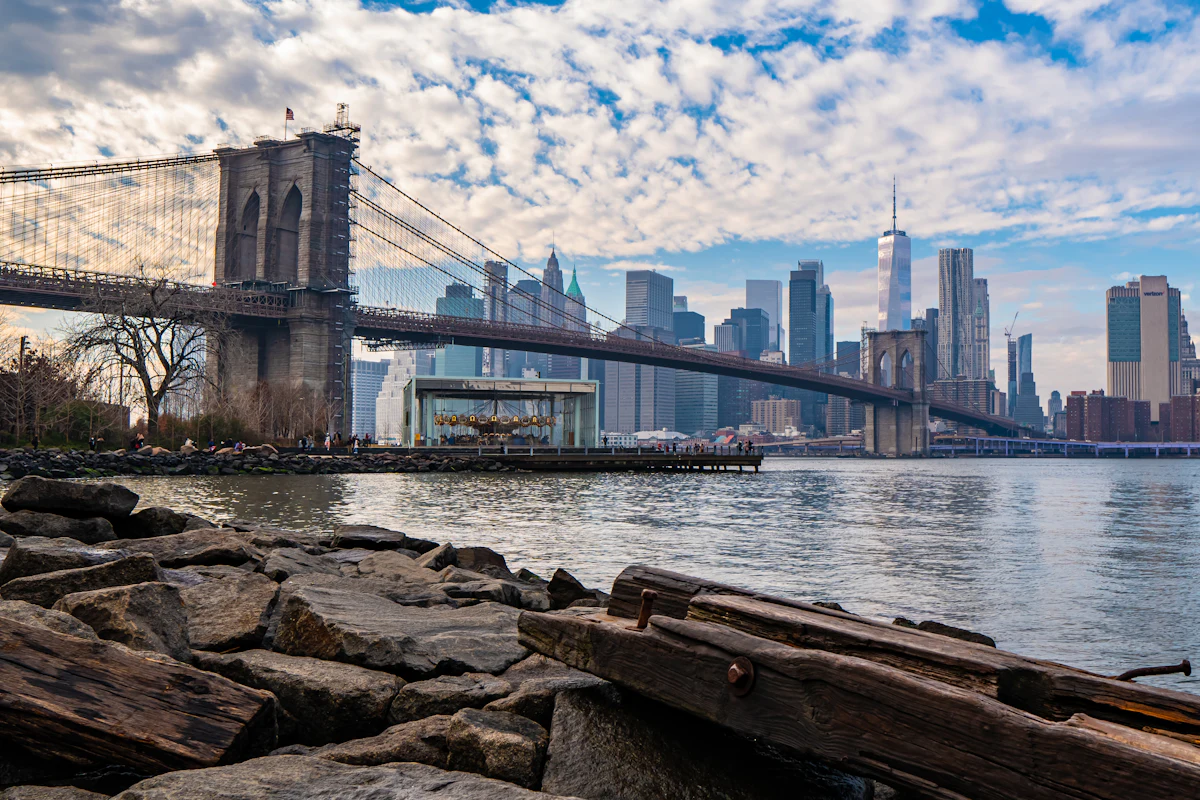
Many Brooklyn garages are only a few blocks from the shoreline, from DUMBO and Brooklyn Heights to Williamsburg, Greenpoint, Red Hook, Sunset Park and Coney Island. Salt in the air, groundwater near the surface and storm surge on low blocks push chlorides and moisture into concrete faster than they reach garages further inland. Several of these neighborhoods flooded during Hurricane Sandy, and garages below grade in the flood zones still carry that risk with every major storm.
- A high water table keeps steady pressure on walls and slabs below grade.
- Sea spray and winter road salt speed up rust in rebar and steel beams.
- Repairs in flood zones have to be built to take another surge.
- Ramps and entrances on low blocks need drains that keep up with heavy rain.
What Happens After You Call Us
Every job follows the same four steps, and the loop starts again at the garage’s next yearly observation.
We Look at What You Have
Your report, violation notice or photos, along with the garage’s record in DOB NOW.
We Bring In the Right People
A QPSI partner when a report or observation is needed, our estimator when the work is repair.
You Get a Priced, Dated Plan
Each item comes with a method, a price and a phase that lands before its deadline.
Our Crews Repair and Close Out
We finish the work and hand the records to the QPSI, and the loop starts again at the next yearly observation.
How We Work With Licensed Garage Inspectors
Only a QPSI can sign a Local Law 126 garage report, and to qualify, an engineer must hold a Professional Engineer license in New York, have hands-on garage experience and carry DOB approval. We are a licensed and insured contractor, not an inspector. For every condition assessment and parapet observation we bring in an independent licensed partner, and our crews carry out the repairs their reports ask for.
The Engineer Works for You
The QPSI is hired on the owner’s behalf and signs the report, which we never do.
One Schedule for Both
Inspection visits and repair crews run on one calendar, so neither waits on the other.
Records Ready to Hand Over
Photos and repair logs reach the QPSI in the form the amended report needs.
A Typical Brooklyn Garage Repair, Start to Finish
Here is how a common job on a Brooklyn garage moves from a report to a finished repair. Drag the slider to compare the kind of damage we start with and the finish we leave behind.
Problem
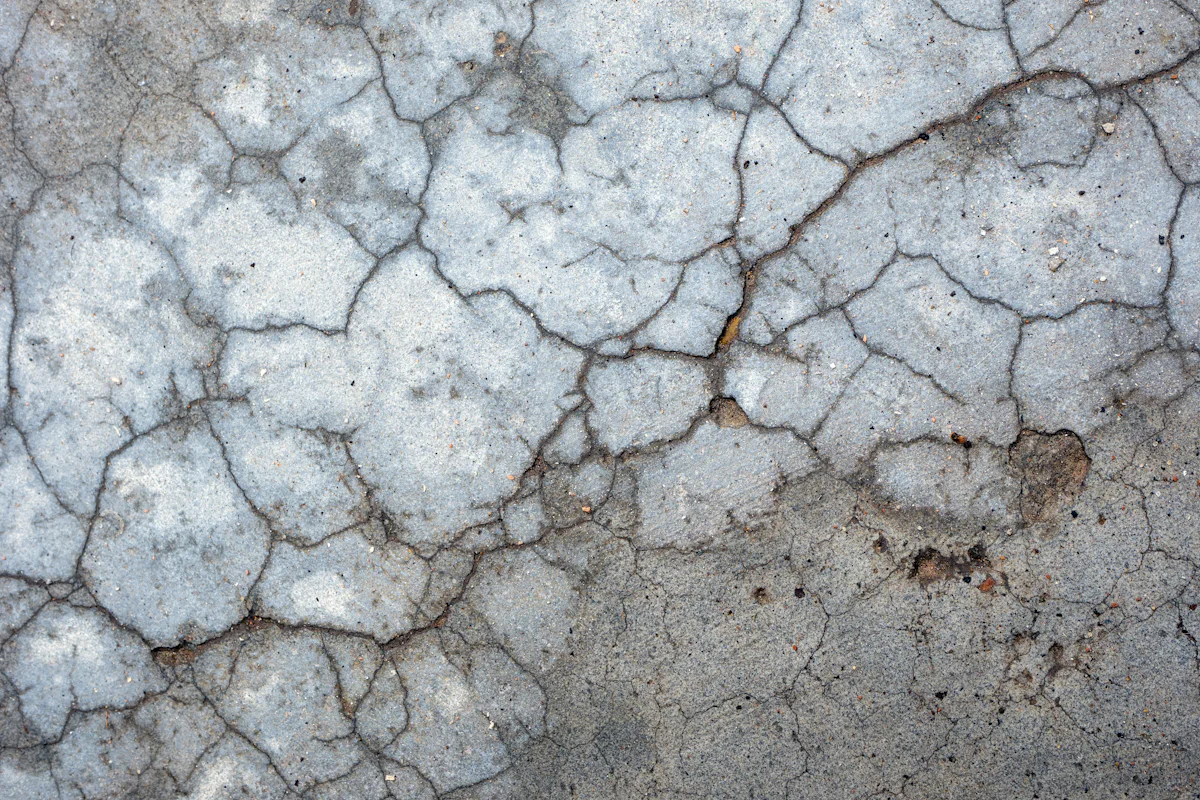
A QPSI report on a garage under a Brooklyn apartment building lists hollow, spalling concrete on the ceiling of the lowest level, rated SREM with a completion date, plus leaking joints on the level above.
What We Do
Our crews remove the loose concrete, clean and treat the rusted steel, rebuild the ceiling with repair mortar and reseal the joints above, one zone at a time so the garage stays open.
Result
The QPSI checks the finished work against the report, our photos and logs go into the file, and the item comes off the open list before its date.
Brooklyn Neighborhoods Where We Repair Garages
We work on garages under apartment towers, hospitals, shopping centers and mixed-use buildings all over the borough, including these neighborhoods.
Brooklyn Garage Owners Ask About Local Law 126
Every Brooklyn community district was placed in Sub-cycle B, with a filing window that opened January 1, 2024 and closed December 31, 2025. Any Brooklyn garage still missing an accepted report is now late.
DOB lists a $1,000 penalty for each month a report is late and $5,000 for each year one is never filed. DOB takes payment only after an acceptable report is submitted, so the first move is getting a QPSI booked.
Almost any structure where cars are parked or stored, from garages under apartment buildings, hospitals and stores to stand-alone parking decks. The rule does not reach garages built for under three cars, private garages that belong to one- or two-family houses, surface lots outside a building, or uses such as repair shops, gas stations and loading docks.
Local Law 71 of 2024 ends the current six-year cycle after December 31, 2027 and moves garages to four-year cycles from then on. Brooklyn owners who filed can expect their next full assessment under that shorter schedule.
A building with a parapet facing a street, sidewalk or other public way needs an observation every year, finished by December 31. The owner keeps the report for at least six years and shows it to DOB on request, and an unsafe parapet has to be reported to DOB through 311 right away.
Protection has to be in place right away, and the repair is due 90 days after the report goes in. Once the work wraps up, the engineer has two weeks to submit the amended report.
The DOB penalty for leaving an SREM condition uncorrected is $2,000. On top of that, an item still open at the next cycle is rated Unsafe and gets the 90-day deadline.
In most cases, yes. We close one zone at a time, move loud or dusty work to nights and weekends, and keep drivers and walkers out of active areas. A large Unsafe area may need to stay closed until it is shored.
The QPSI does. Unsafe items are closed with an amended report, and SREM items are checked at the QPSI's follow-up visit. Our photos and repair logs go to the engineer ahead of time.
Rain raises the water in the soil around the garage, and that water presses on the walls and floor until it finds a crack, a tired joint or a gap around a pipe. Blocked drains on the levels above can send even more water down.
They can be. The QPSI looks at waterproofing, joints and drains, and a leak that is rusting steel or breaking down concrete can be rated SREM or Unsafe. Catching a leak early stops it from becoming a structural repair.
Often, yes. Crack injection, joint repair and coatings applied from the inside stop many leaks without digging. Where the outside waterproofing has failed over a large area, a longer-lasting fix may need work from the exterior side of the wall.
They usually need tougher materials and closer attention to salt. Groundwater near the shore carries chlorides, so repairs there pair leak sealing with steel protection and products made for wet, salty conditions.